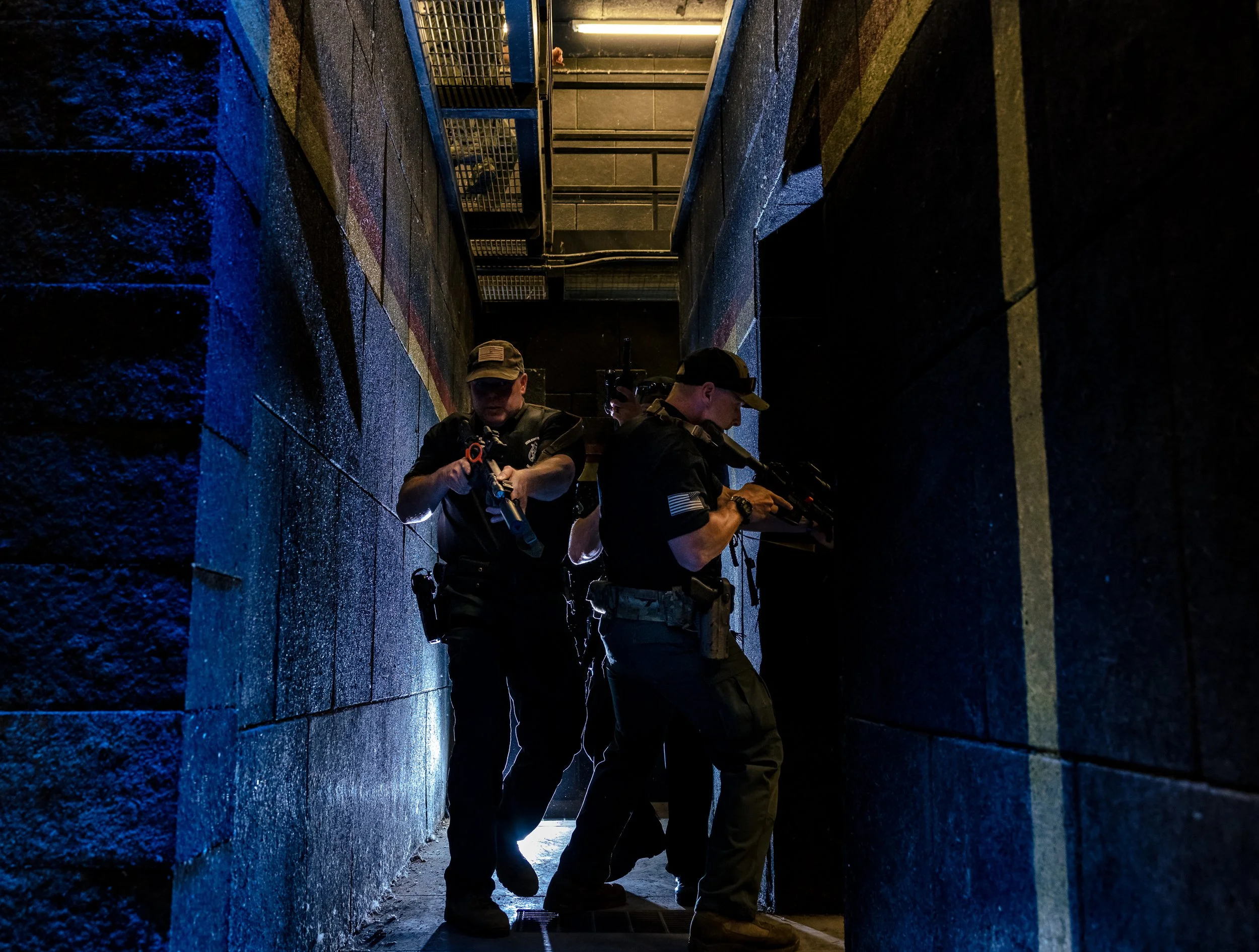
Small Unit Tactical Operations (SUTO)

$0.00

Course Length: 3 days (24-30 training hours)

Delivery Format: Classroom instruction, Practical Skills, Force-on-Force Scenarios

Target Audience: Law Enforcement Officers, Detective Units, Specialty Enforcement Units (DTFs, Apprehension Teams, Fugitive Units, Task Forces)

Course Overview:
Small Unit Tactical Operations is a three-day advanced training program designed for Law Enforcement officers, Detective Units, and Specialty Teams such as Drug Task Forces (DTFs) and Apprehension Groups engaged in high-risk, team-based operations. The course prepares personnel to effectively plan, coordinate, and execute missions including open-air arrests, vehicle suppressions, and warrant-service operations while emphasizing safety, communication, and structured decision-making.

Participants will develop the skills necessary for tactical planning, scouting, team integration, risk mitigation, and safe resolution of complex operations. Instruction focuses on leadership, coordination, and problem-solving within small units operating in dynamic environments.

Highlights:

  • Scenario-Based Training

  • Force-on-Force Exercises

  • NLTA Integration

  • Realistic Mission Preparation

  • Team-Based Planning & Execution

  • Instructor-Led AARs

Equipment Needed: Standard PPE, duty gear, protective equipment, long sleeves/gloves for NLTA

Course Length: 3 days (24-30 training hours)

Delivery Format: Classroom instruction, Practical Skills, Force-on-Force Scenarios

Target Audience: Law Enforcement Officers, Detective Units, Specialty Enforcement Units (DTFs, Apprehension Teams, Fugitive Units, Task Forces)

Course Overview:
Small Unit Tactical Operations is a three-day advanced training program designed for Law Enforcement officers, Detective Units, and Specialty Teams such as Drug Task Forces (DTFs) and Apprehension Groups engaged in high-risk, team-based operations. The course prepares personnel to effectively plan, coordinate, and execute missions including open-air arrests, vehicle suppressions, and warrant-service operations while emphasizing safety, communication, and structured decision-making.

Participants will develop the skills necessary for tactical planning, scouting, team integration, risk mitigation, and safe resolution of complex operations. Instruction focuses on leadership, coordination, and problem-solving within small units operating in dynamic environments.

Highlights:

  • Scenario-Based Training

  • Force-on-Force Exercises

  • NLTA Integration

  • Realistic Mission Preparation

  • Team-Based Planning & Execution

  • Instructor-Led AARs

Equipment Needed: Standard PPE, duty gear, protective equipment, long sleeves/gloves for NLTA

Key Learning Objectives:

By the end of this course, participants will be able to:

• Tactical Medic roles / integration / Equipment

• Medical Mission Planning

• Apply Care Under Fire, Tactical Field Care, and Tactical Evacuation Care principles.

• Tactical Movement and Positioning

• Triage / Common Injuries / Wounds

• Manage airway compromise and respiratory injuries in challenging conditions.

• Recognize and treat shock, hypothermia, and other preventable causes of death.

• Perform patient packaging and rapid casualty evacuation.

• Operate effectively as part of a tactical team while providing medical support.

• Communicate and coordinate with command, EMS, and other response elements.

• Building Training Calendar

• Casualty Collection Points / Mass Casualty Events

• Legal Considerations / Medical Oversight

• K-9 medical Overview

Training Methodology:

• Classroom modules on tactical medicine principles, protocols, and equipment.

• Hands-on skill stations for bleeding control, airway management, and casualty movement.

• Live-fire or simulation scenarios (depending on jurisdiction and safety policy).

• Stress inoculation drills to build decision-making and performance under pressure.

Certification:

Participants receive a Tactical Medicine Certificate of Completion

Prerequisites:

• Basic medical training (First Aid, EMT, or equivalent) recommended.

• Law enforcement, or military background preferred but not mandatory for certain versions of the course.